Taha Fakhree••5 min read
Understanding Modified Starches: What They Are & Why They Matter
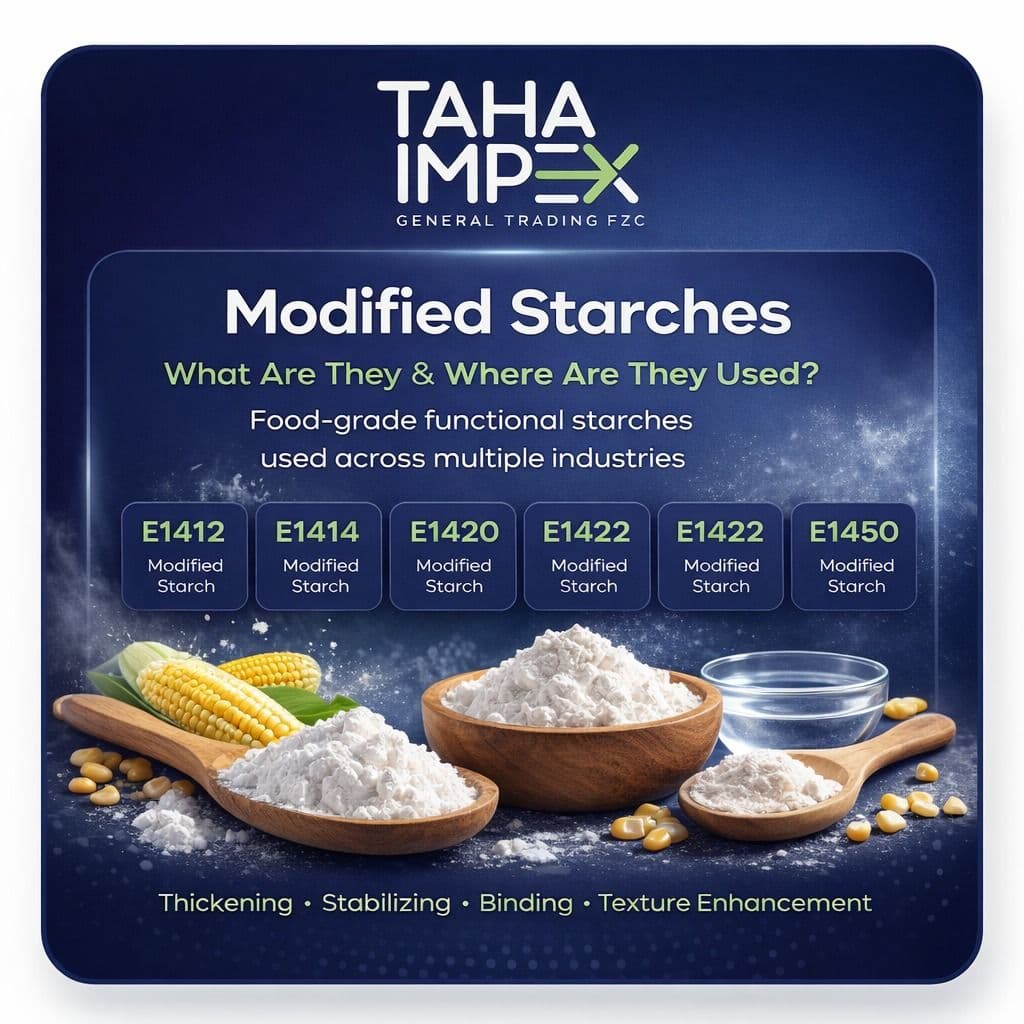
Modified starches are food grade ingredients used to improve texture, stability and shelf life in sauces, soups, dairy products and frozen meals.
Walk through any supermarket and you’ll notice something interesting: soups are smooth, sauces are thick, yogurt is creamy, and frozen meals still hold their texture after reheating. That consistency doesn’t happen by accident.
One ingredient that quietly helps make this possible is modified starch.
You may have seen it listed on ingredient labels with names or E-numbers and wondered what it actually does. Let’s break it down in simple terms.
So, What Exactly Are Modified Starches?
Modified starches are natural starches that come from sources like corn, tapioca, potato, or wheat.
The word “modified” simply means the starch has been adjusted to perform better in food production. It doesn’t mean artificial or unsafe, it just means the starch has been improved to handle heat, mixing, freezing, or long storage.
Regular (native) starch works fine in home cooking. But in large-scale food manufacturing where products are heated, mixed continuously, frozen, packaged, and transported, normal starch can break down.
That’s where modified starch comes in. It’s designed to stay stable and do its job even under tough conditions.
Why Do Food Manufacturers Use It?
Because consistency matters.
Modified starch helps:
- Keep sauces thick and smooth
- Prevent water from separating
- Improve texture and mouthfeel
- Handle high heat during cooking
- Stay stable during freezing and thawing
- Extend shelf life
In short, it helps products look better, feel better, and last longer.
Understanding the Common Types (E-Numbers Explained Simply)
You’ll often see modified starches listed with E-numbers. Each one is designed for a specific purpose.
E1412 – Distarch Phosphate
Great for heat stability. Commonly used in soups, sauces, and canned foods.
E1414 – Acetylated Distarch Phosphate
Works well in frozen foods. Helps maintain texture after freezing and reheating.
E1420 – Acetylated Starch
Improves smoothness and consistency. Used in desserts, dairy products, and fillings.
E1422 – Acetylated Distarch Adipate
Handles both heat and freezing very well. Often found in gravies, dressings, and ready meals.
E1450 – Starch Sodium Octenyl Succinate
Acts as an emulsifier. Helps mix oil and water in beverages and flavor systems.
Each type is selected depending on what the final product needs to achieve.
Where Are Modified Starches Used?
They’re used across many industries, especially in:
- Soups and sauces
- Instant noodles
- Dairy products
- Frozen meals
- Processed meats
- Bakery fillings
- Beverages and nutrition products
Basically, if a product needs stability and consistent texture, modified starch is often part of the formula.
Are Modified Starches Safe?
Yes. Food-grade modified starches are approved by food safety authorities worldwide. They are widely used in the global food industry and meet regulatory standards.
Final Thoughts
Modified starches may not be something consumers think about, but they play a big role in making modern food products stable, consistent, and high quality.
As food processing becomes more advanced and consumer expectations continue to rise, the need for reliable functional ingredients like modified starch keeps growing.
If you’re looking for high-quality modified starches or customized solutions tailored to your product needs, feel free to reach out to Taha Impex. We’re here to help you find the right starch solution for your application.