Taha Fakhree•Founder Director Taha-impex••4 min read
Premium Bagasse Solutions for Paper, Packaging, and Renewable Energy
High-quality bagasse for paper, packaging, industrial, and renewable energy applications. Reliable supply, consistent quality, and sustainable sourcing.
Bagasse Products: The Sustainable Material Shaping the Future of Packaging
Bagasse products are gaining momentum across global trade, and the shift is easy to understand. As industries look for cleaner, smarter, and more responsible materials, bagasse has stepped forward as one of the most practical alternatives. It offers strength, versatility, and a lower environmental footprint, which makes it appealing to foodservice brands, packaging companies, retailers, and eco focused manufacturers around the world.
For professionals in import export, bagasse is not just another product category. It represents the next phase of sustainable material adoption.
A Material With Real World Purpose
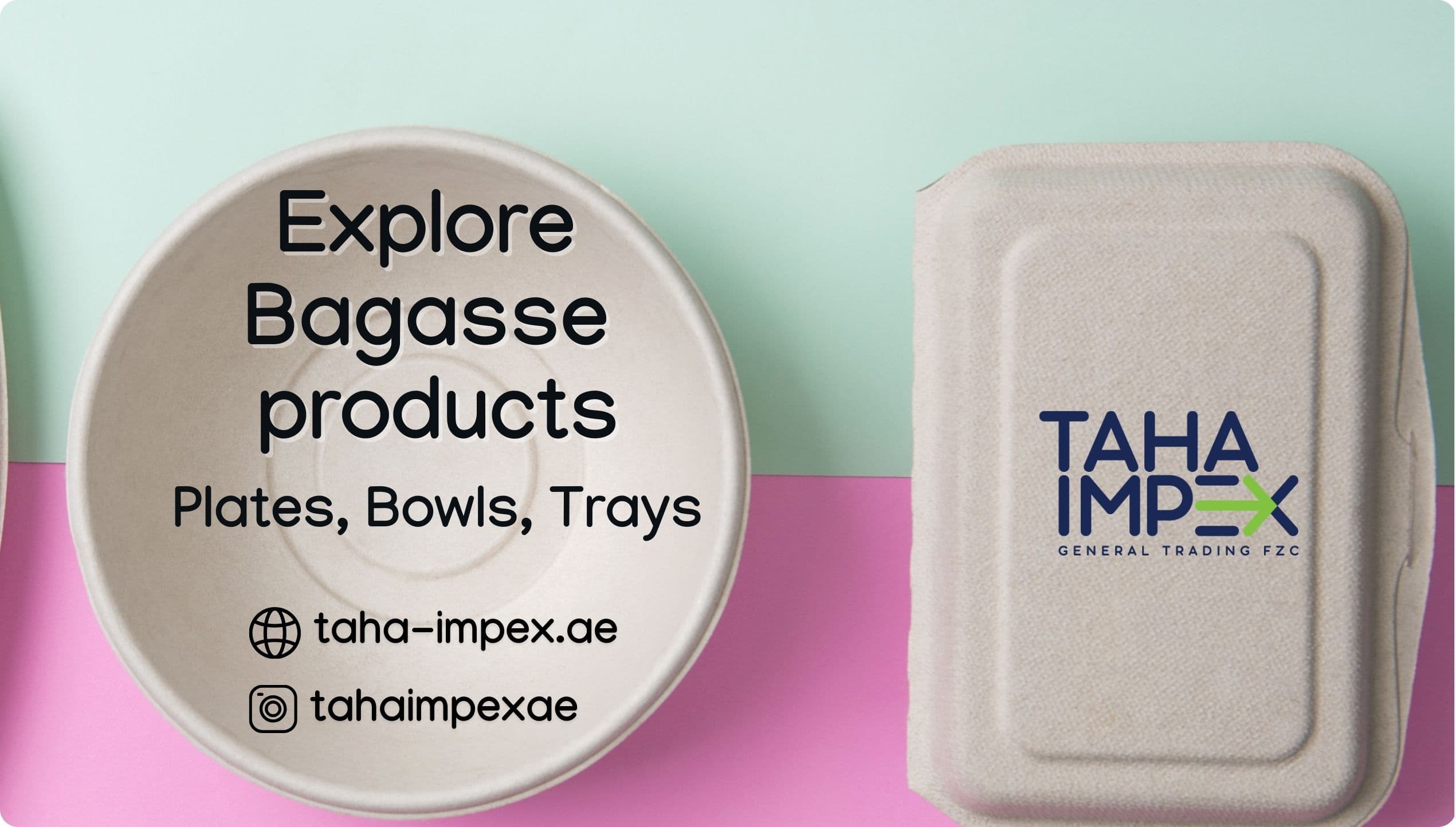
Bagasse starts as a byproduct of sugarcane. Once the juice is extracted, the remaining fiber becomes a base material for plates, bowls, containers, trays, and a wide range of packaging formats. What makes it valuable is how naturally it fits into industries that rely on both strength and sustainability.
Foodservice companies use it for hot and cold meals. Retailers adopt it for take away and delivery. Corporate and hospitality sectors turn to it for eco conscious alternatives to plastic.
Its performance is stable, predictable, and suitable for high volume use.
Why Businesses Are Making the Shift
The move toward bagasse is driven by both market demand and regulation. Consumers want safer, cleaner packaging. Governments encourage reduced plastic usage. Companies want materials that support sustainability goals without compromising quality.
Bagasse fits this balance. It is compostable. It handles heat well. It maintains structure under moisture. It works efficiently across automated packing lines.
These features help companies upgrade their product range without disrupting their operations.
A Market Growing Across Regions
Asia leads the production of bagasse based items, supported by strong sugarcane output. Export movement continues to rise toward the Middle East, Europe, Africa, and the Americas as businesses expand their eco friendly product lines.
Large food chains and delivery platforms have accelerated this shift. Their adoption sets the pace for local businesses, small cafes, and retailers that want packaging which supports the sustainability narrative customers now expect.
What Buyers Value Most
In this category, quality goes beyond appearance. Buyers evaluate:
Strength and rigidity Heat resistance Microwave safety Composability standards Clean edges and smooth finish Reliable sizing and uniform production Food safety compliance
These details influence how the final product performs once it reaches a kitchen, counter, or delivery system.
The Bagasse Products That Move in Volume
Plates, containers, hinged boxes, trays, cups, and lids continue to dominate demand. Multi compartment containers remain popular among meal prep and catering businesses. Retailers also look for lightweight formats that maintain the organic look customers appreciate.
As the category grows, new designs and custom shapes are being developed for specialty markets.
A Category That Reflects Modern Consumer Values
Sustainability is no longer a trend. It is a decision making factor. Bagasse products support this reality by offering a material that aligns with both environmental responsibility and commercial practicality.
For decision makers, this category provides an opportunity to upgrade their packaging range with products that reflect how the world is changing. It supports brand reputation, regulatory compliance, and consumer trust
A Closing Perspective
Bagasse products represent the future of responsible packaging. They travel from fields to factories to consumers with a message that resonates across industries. Clean. Strong. Sustainable. Businesses that understand the potential of this category position themselves ahead of a shift that is only going to accelerate.
This material may come from agricultural waste, but its impact is shaping modern packaging in ways that will define the years ahead.